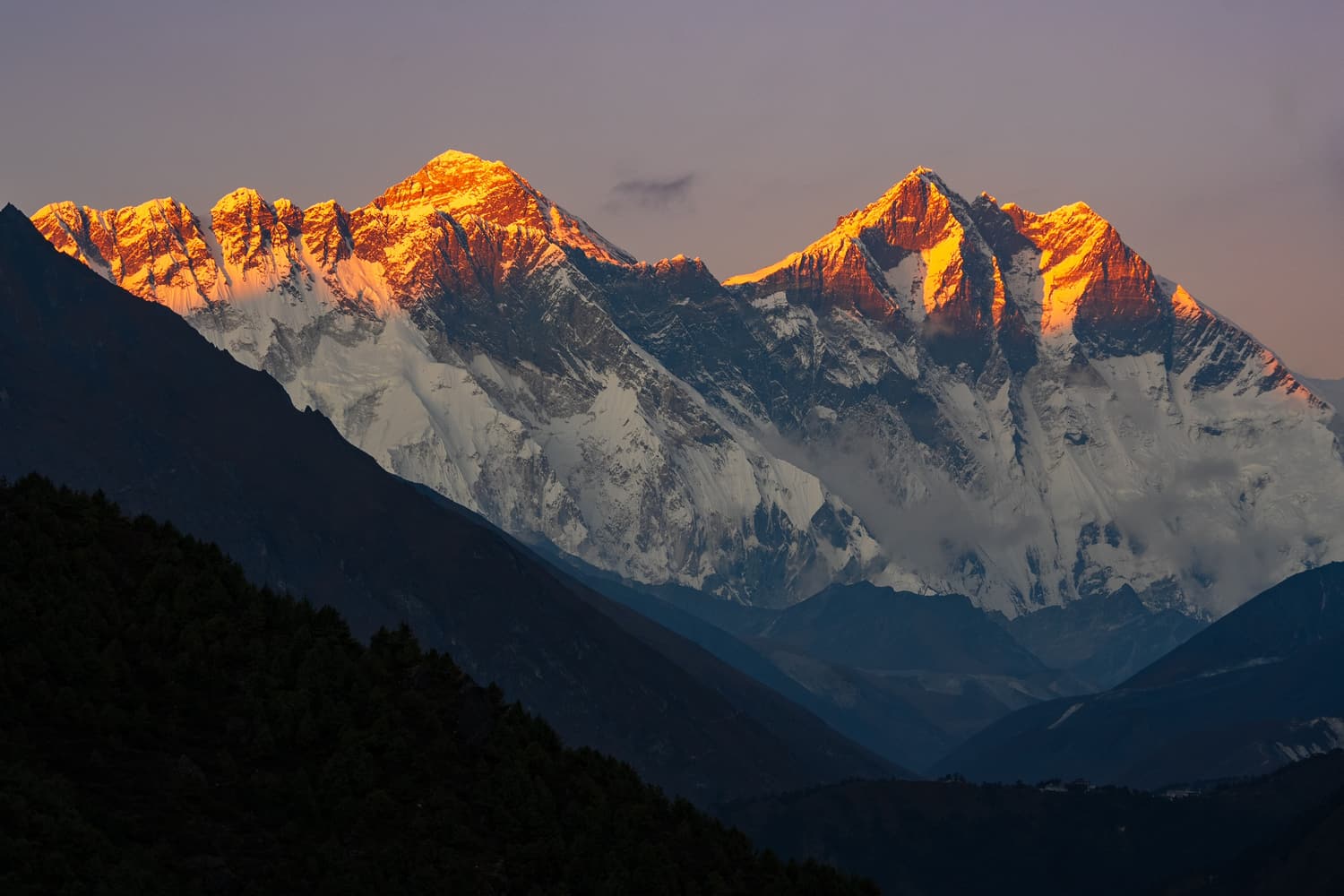
The Khumbu has two main trekking seasons, set by the monsoon: October–November (after the monsoon, with the clearest skies) and March–May (before it, warmer, with blooming rhododendrons and the Everest climbing season in full swing). Winter is possible but cold; the monsoon is wet, cloudy and bad for flights.
Everest Base Camp month by month
| Month | Weather | Crowds | Verdict |
|---|---|---|---|
| January | Very cold, mostly clear; heavy snow possible | Very low | For hardy trekkers; some lodges close |
| February | Cold, clear spells, snow possible | Low | Quiet and crisp; nights brutal up high |
| March | Warming, generally clear | Rising | Good start to spring |
| April | Mild low down, rhododendrons in bloom | High | Excellent — expedition tents at Base Camp |
| May | Warmest, afternoon cloud builds | High | Very good; summit season on Everest |
| June | Monsoon arrives; cloud and rain | Low | Poor views, frequent flight delays |
| July | Monsoon; wet and cloudy | Very low | Not recommended for EBC |
| August | Monsoon; wet and cloudy | Very low | Not recommended for EBC |
| September | Monsoon ending; clearing late month | Rising | Fair; improves by the week |
| October | Clear, stable, crisp | Peak | The best month — book early |
| November | Clear, colder nights | High | Superb visibility, fewer people |
| December | Cold, often clear | Low | Good for solitude if you pack warm |
Autumn: October to November — the classic choice
The monsoon washes the air clean, and October and November bring the most reliable mountain views of the year: blue skies, stable weather and crisp nights. It is also the busiest time on the trail and at Lukla — book guides, lodges and flights well ahead. The Mani Rimdu festival at Tengboche usually falls in October or November (dates follow the Tibetan calendar).
Spring: March to May — flowers and expeditions
Temperatures climb, rhododendron forests below Tengboche bloom red and pink, and from April the Everest expeditions set up their tents at Base Camp — the only time of year it looks like the photos. Visibility is good in the mornings, with haze and cloud building in the afternoon, especially in May.
Winter: December to February — cold, quiet, clear
Skies are often clear and the trail is almost empty, but nights at Lobuche and Gorak Shep can fall to −20 °C or lower, and heavy snowfall can close passes and some lodges. Doable with good gear and a flexible guide; the Gokyo passes may be impassable.
Monsoon: June to August — only for the determined
The Khumbu is in the rain shadow compared with much of Nepal, but cloud usually hides the peaks, trails are muddy low down, leeches appear below Namche and Lukla flights are frequently cancelled. If you must travel now, consider the Tibet side or an Everest flight on a clear morning instead.
When to avoid
- Peak monsoon (July–August) for the trek itself.
- The first half of October if you hate crowds — go in November instead.
- Mid-winter without a proper −15 °C sleeping bag and down jacket.
Temperatures to expect
In the main seasons, days in Namche are often mild (around 10–15 °C in the sun), while nights at Gorak Shep drop to about −10 to −15 °C. The sun is fierce at altitude and the wind is cold — pack for both.