The trek to Everest Base Camp is really a chain of villages, monasteries and viewpoints, each one higher than the last. Knowing what each stop is like — and how high it is — is the key to planning your days and your acclimatisation. Every guide below covers what to do, how to get there and which tours include it.
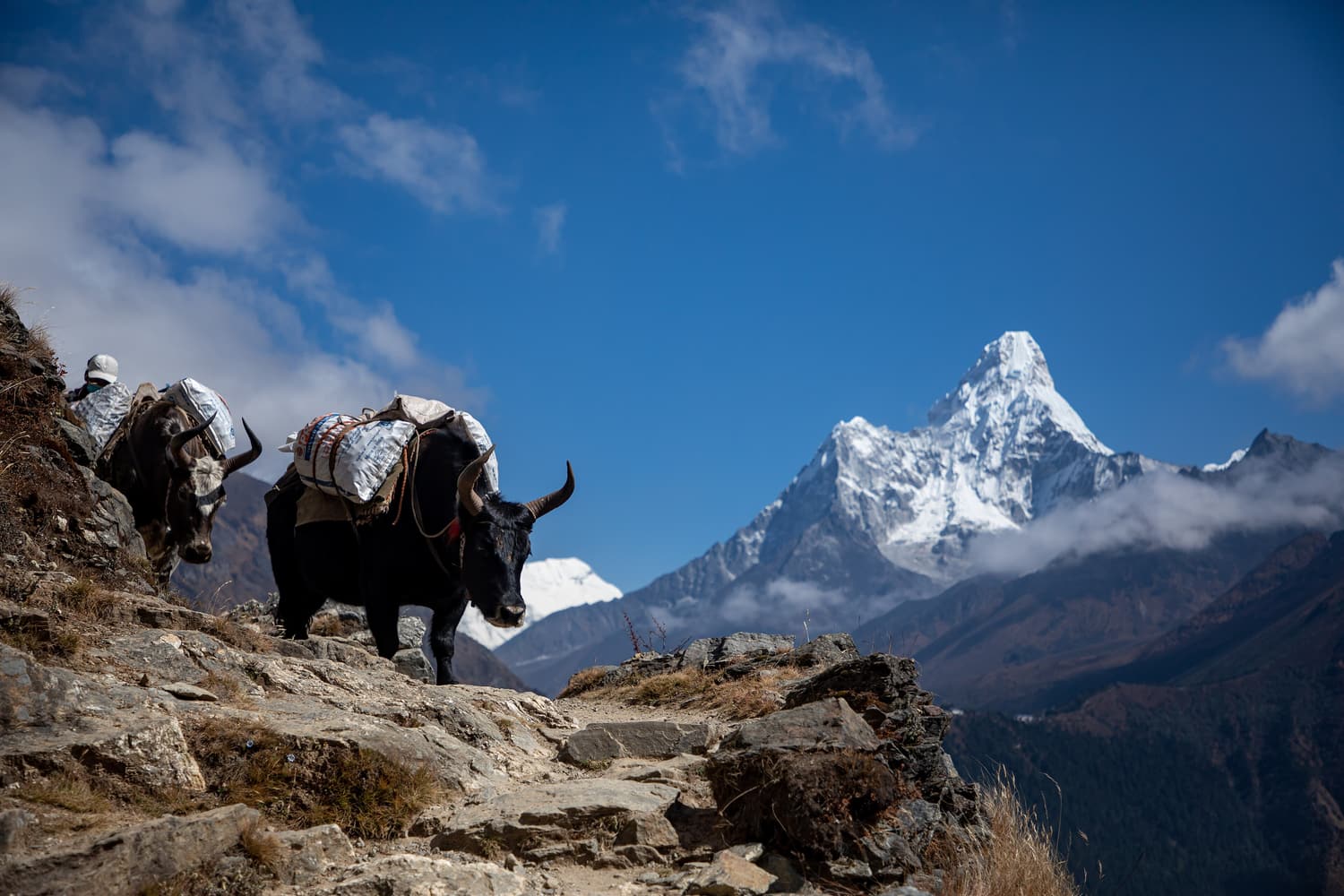
Stops on the Everest Base Camp Trek
Nine places, from the airstrip at 2,860 m to the viewpoint at 5,644 m — and two ways to go beyond.
Lukla & the lower Khumbu
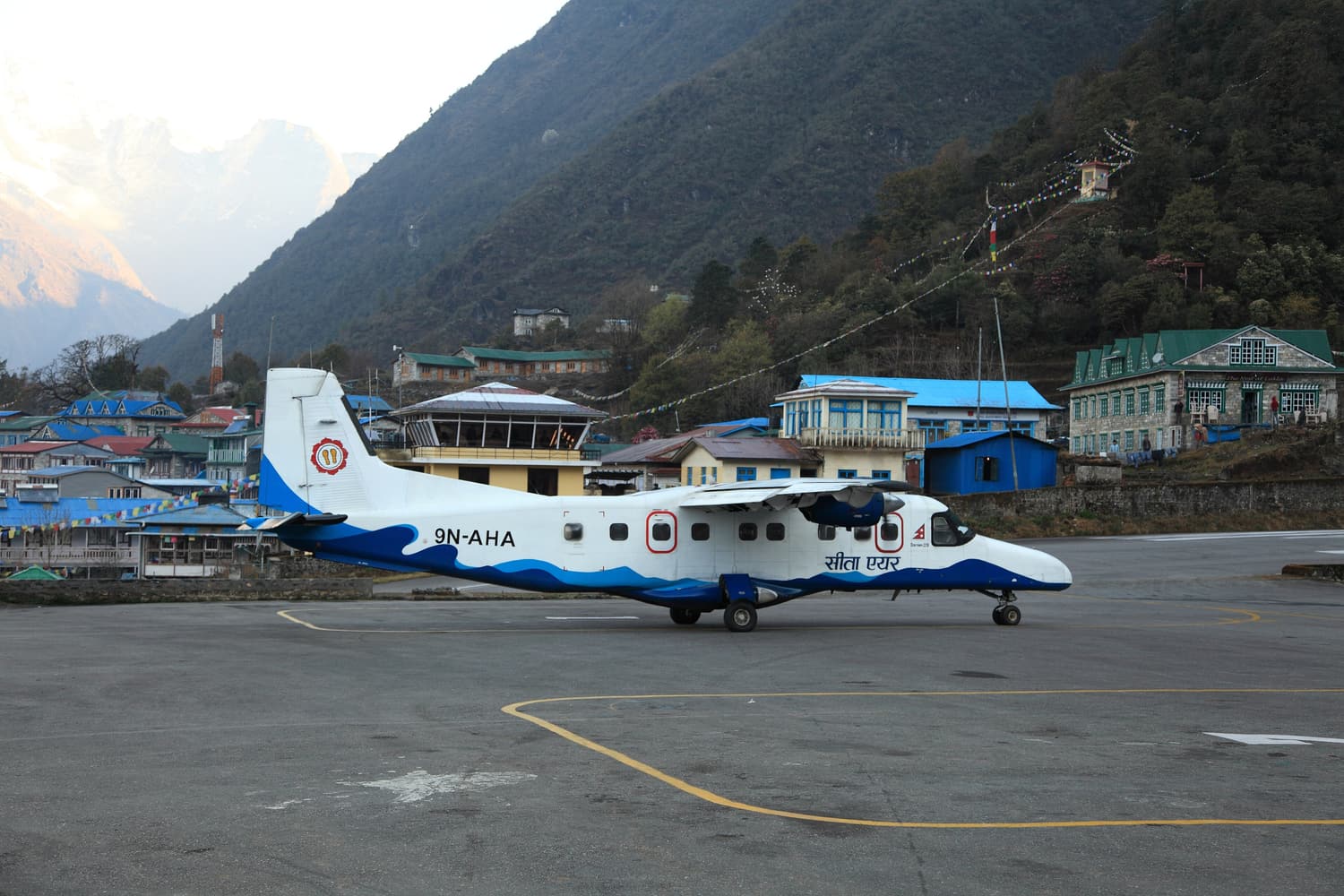 Lukla & the lower Khumbu 2,860 m
 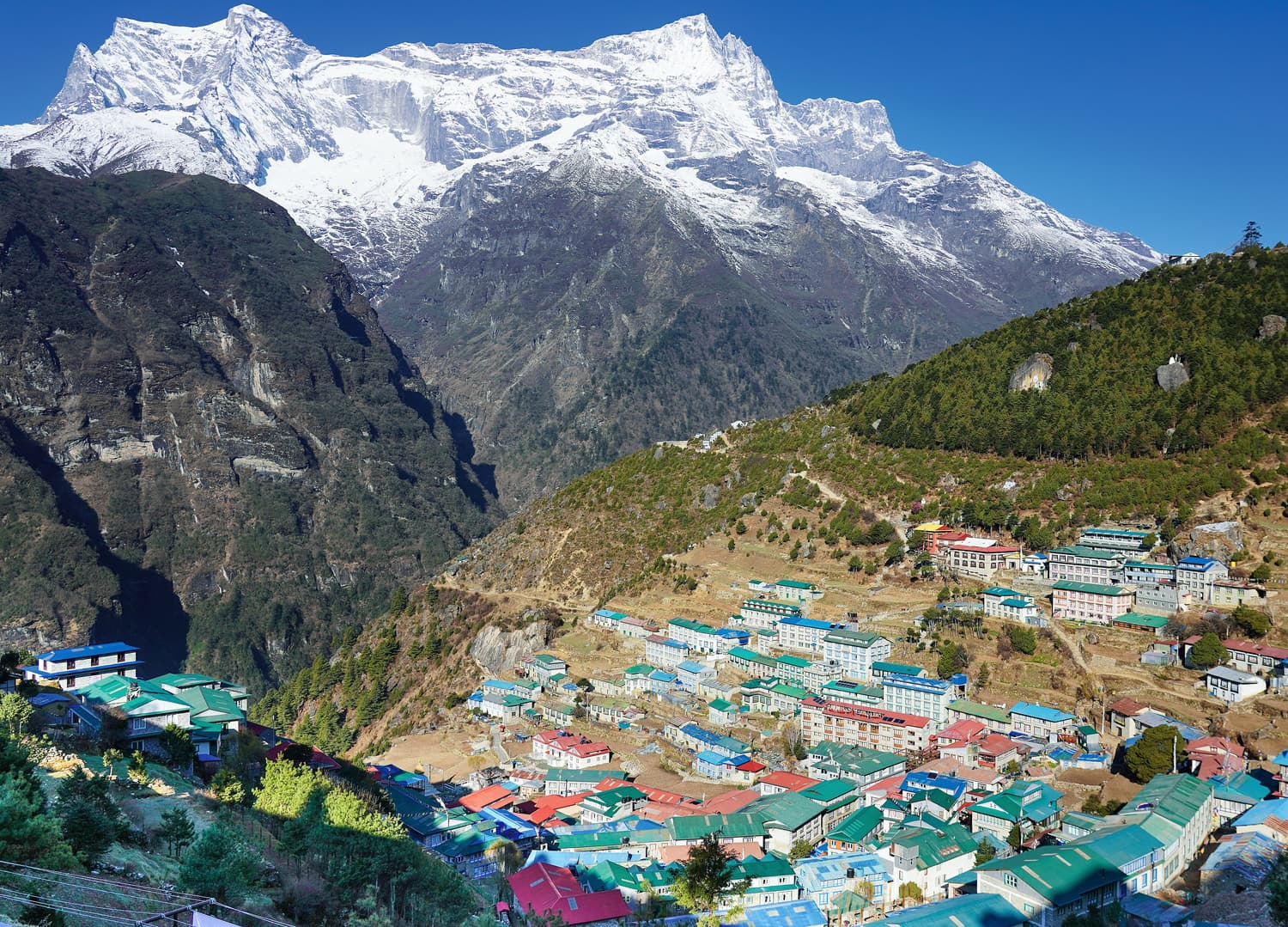 Lukla & the lower Khumbu 3,440 m
 Namche Bazaar
The Sherpa capital
A horseshoe of lodges, bakeries and gear shops in a natural amphitheatre at 3,440 m — the trading hub of the Khumbu and the place every trekker spends an acclimatisation day, with a first view of Everest just above town.
The upper Khumbu
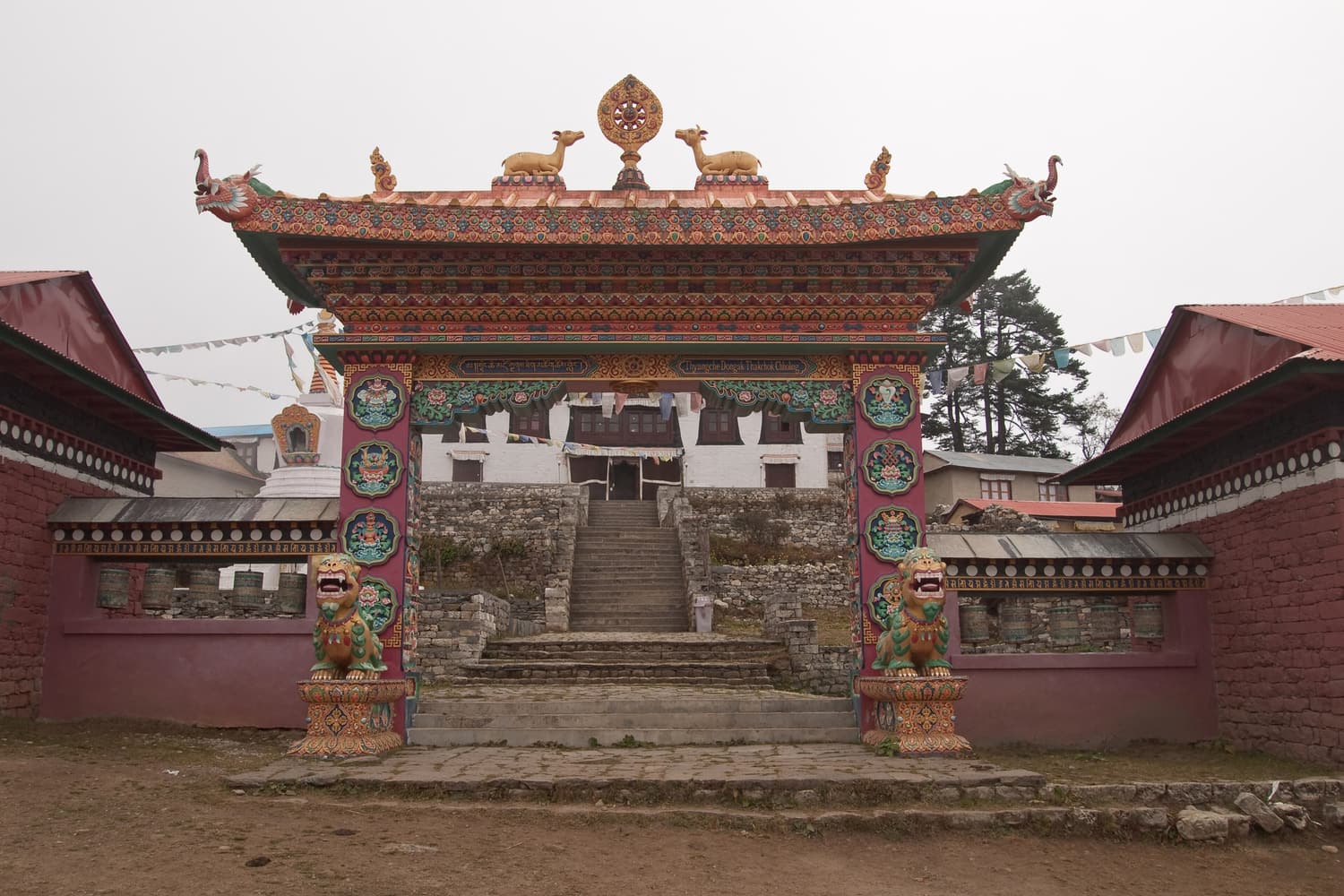 The upper Khumbu 3,867 m
 Tengboche Monastery
The spiritual heart of the Khumbu
The largest monastery in the Khumbu, set on a forested saddle at 3,867 m with Ama Dablam and Everest on the horizon. Monks chant in the afternoon, and the Mani Rimdu festival fills the courtyard each autumn.
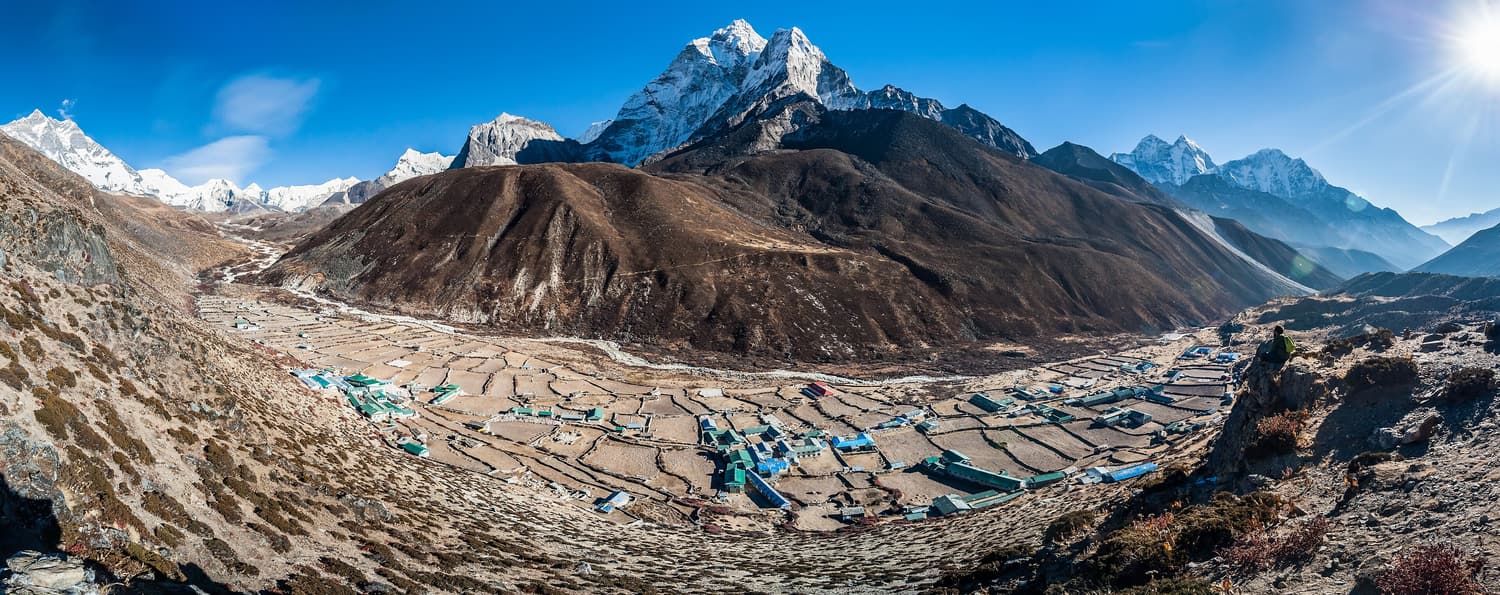 The upper Khumbu 4,410 m
 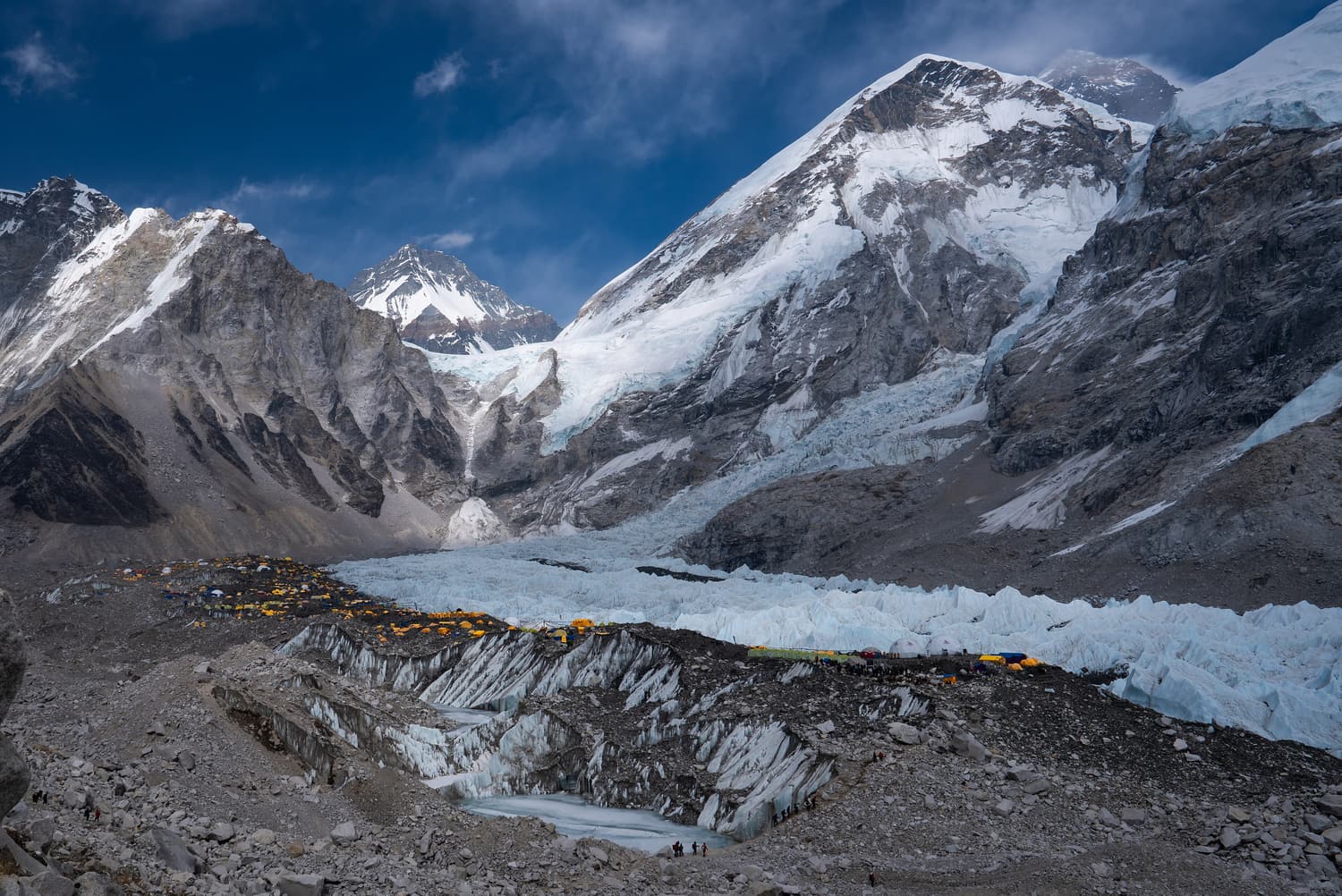 The upper Khumbu 5,364 m
 Everest Base Camp
The foot of the world’s highest mountain
The south base camp of Mount Everest at about 5,364 m, spread across the rubble of the Khumbu Glacier beneath the Khumbu Icefall. In spring it becomes a tent city of expeditions; the rest of the year it is a marked rock festooned with prayer flags.
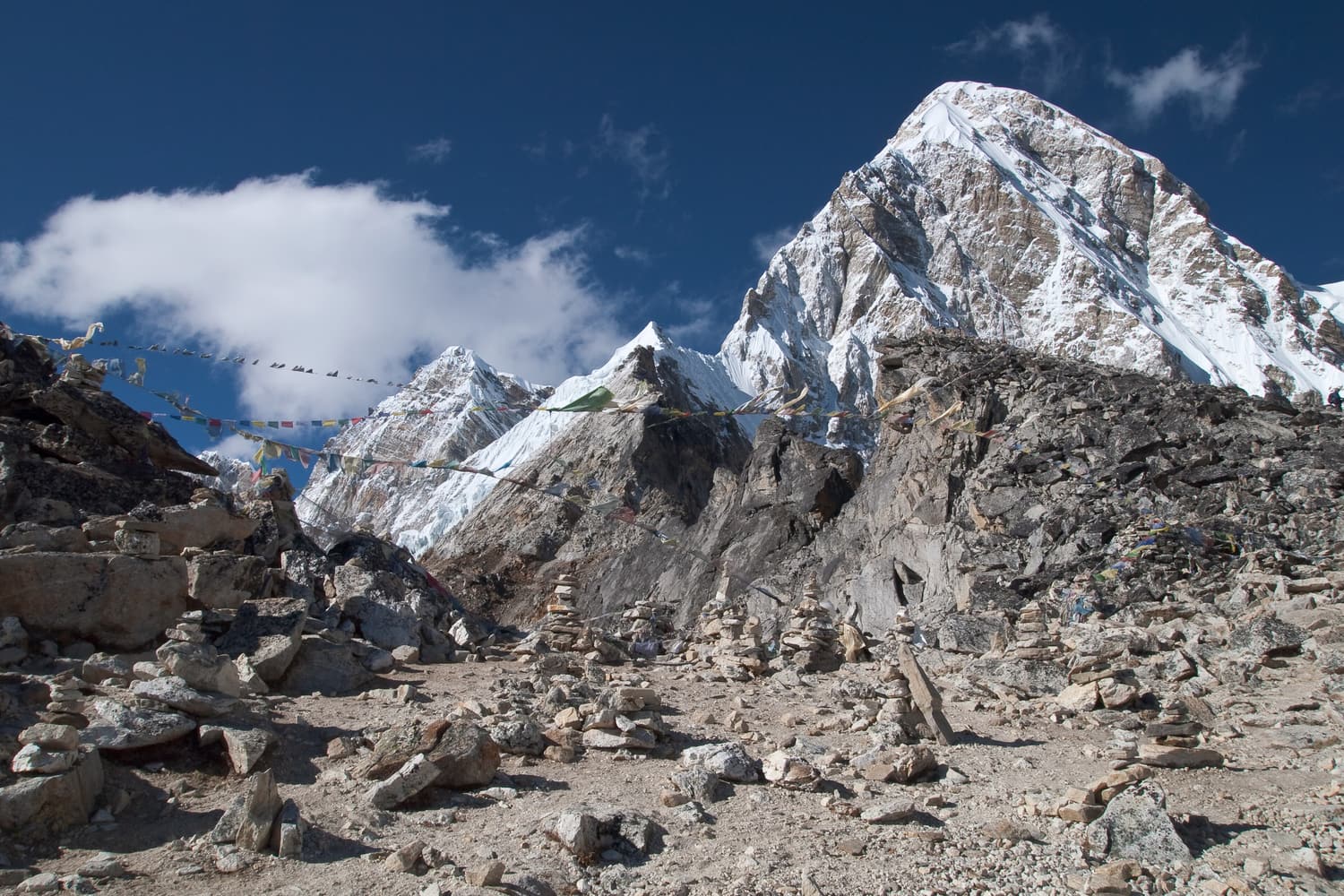 The upper Khumbu 5,644 m
 Kala Patthar
The best view of Everest on the trek
A dark rocky hump on the flank of Pumori, topping out at about 5,644 m above Gorak Shep. From its prayer-flagged summit Everest’s black pyramid stands in full view — the photograph most trekkers came for.
Beyond the classic route
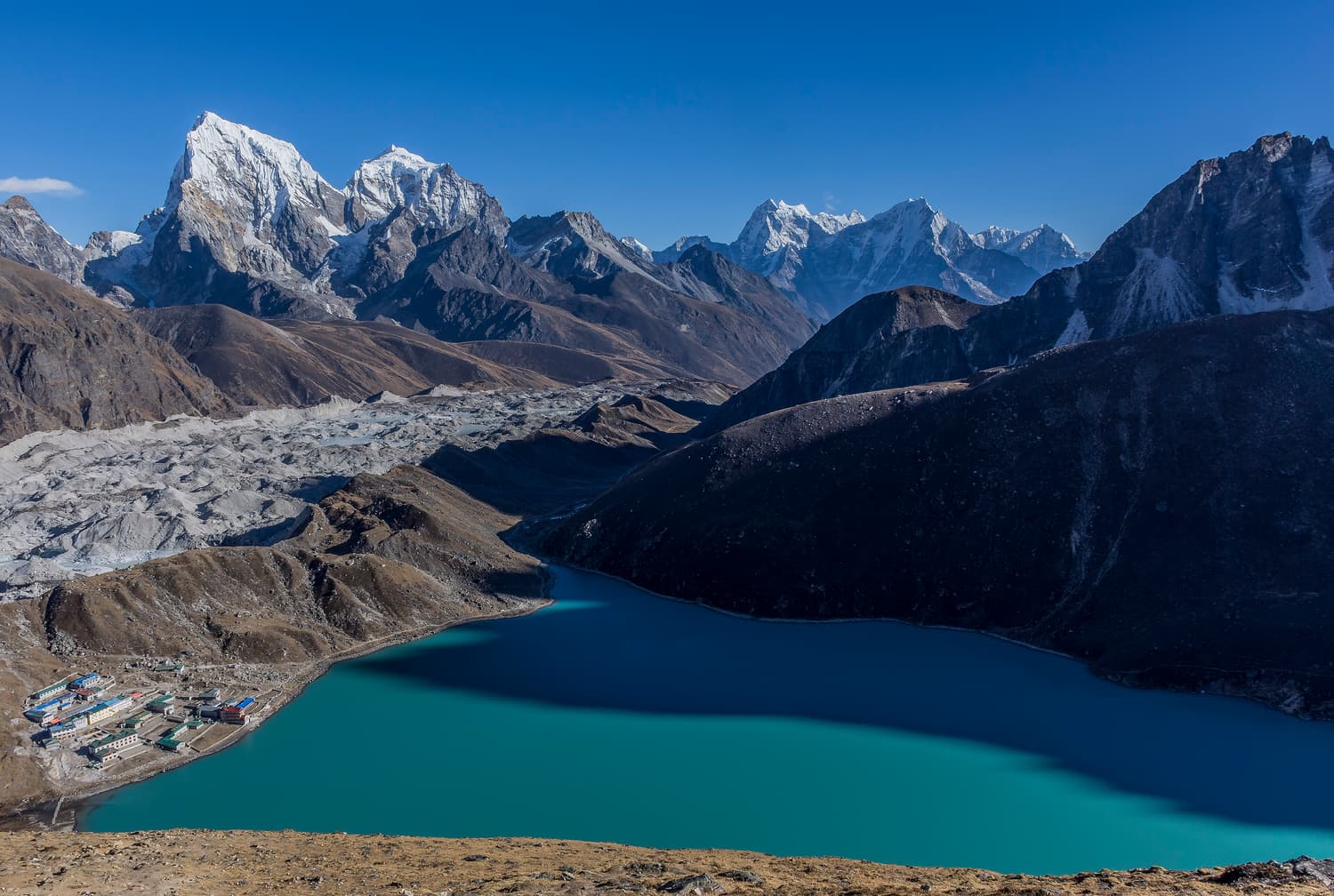 Beyond the classic route 4,790 m
 Gokyo Lakes
Turquoise lakes and a four-8,000er view
A chain of glacial lakes beside the Ngozumpa Glacier in the valley west of the main trail, with the lodges of Gokyo at about 4,790 m. Climb Gokyo Ri for a view of Everest, Lhotse, Makalu and Cho Oyu.
 Beyond the classic route 5,535 m
 The Three Passes
Kongma La, Cho La and Renjo La
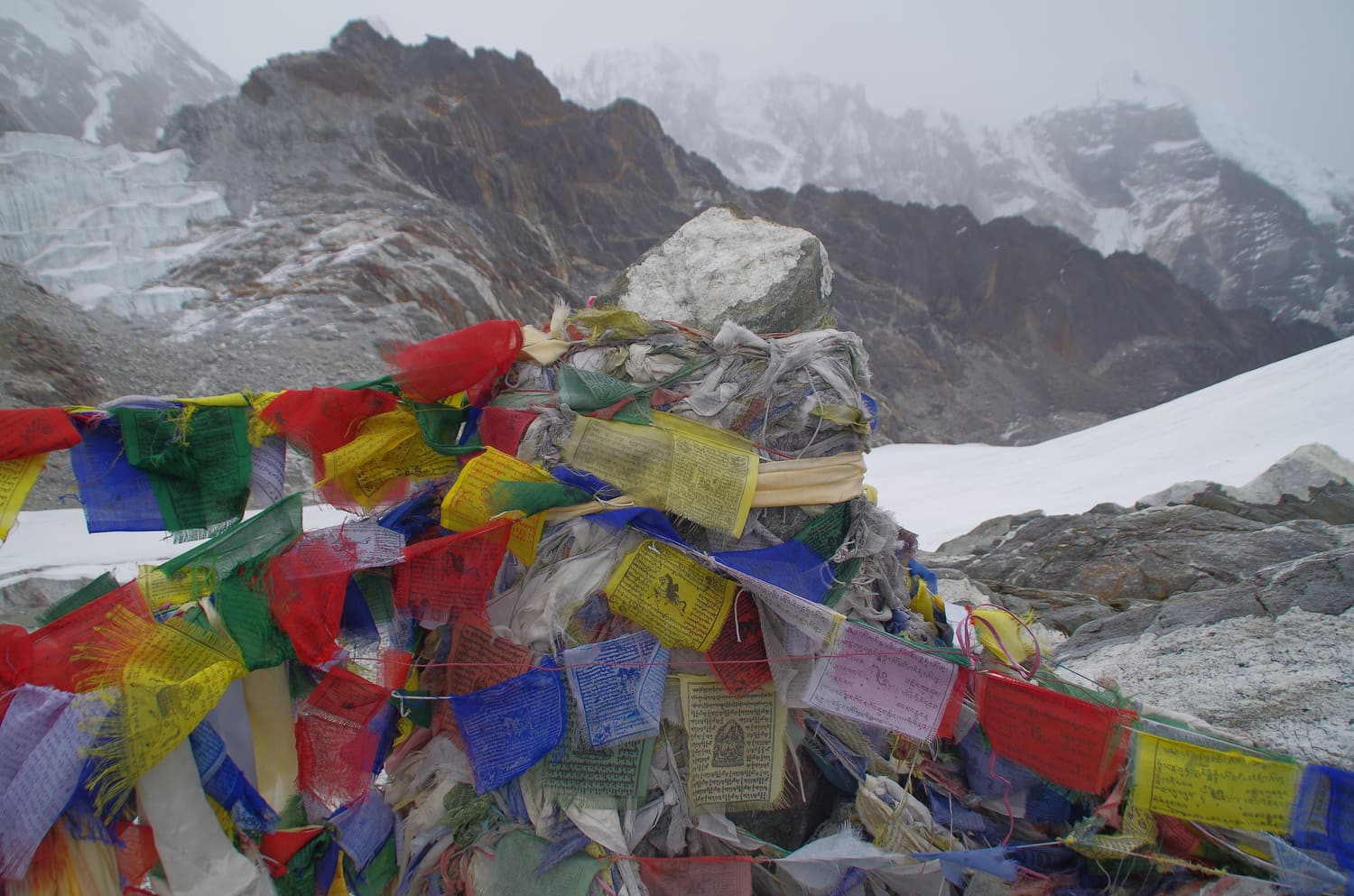
The Khumbu’s great circuit crosses three passes above 5,300 m to link the Everest, Gokyo and Bhote Koshi valleys. It takes around 17–21 days and is the toughest classic trek in the region.
 Beyond the classic route 5,150 m
 Everest North Base Camp (Tibet)
Everest’s north face, by road
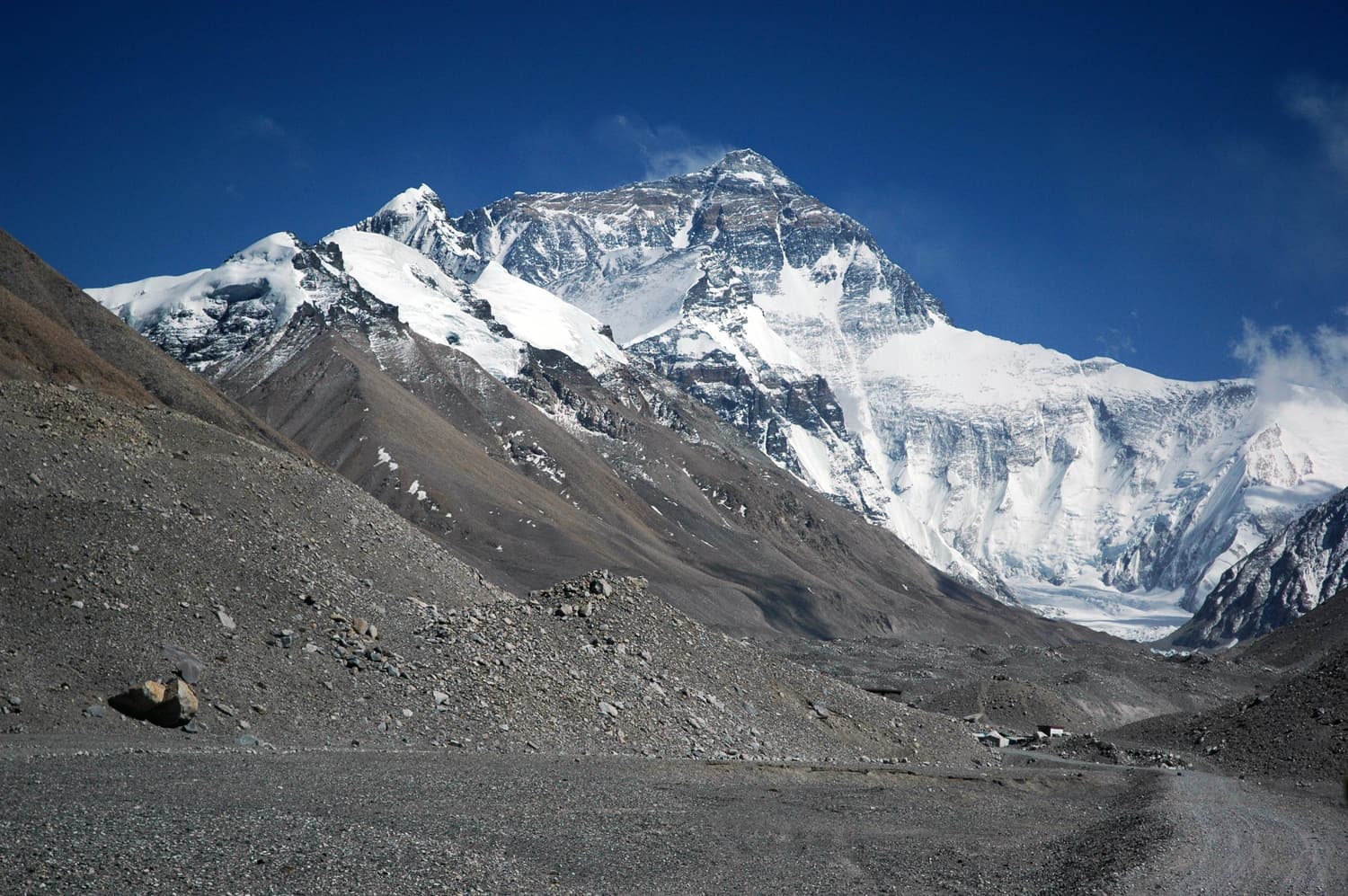
On the Tibetan side, a road climbs the Rongbuk valley to the viewing area near the north base camp at roughly 5,150 m, with Everest’s north face filling the head of the valley. Access is only on an organised tour with a Tibet Travel Permit.
The altitude rule of thumb: above 3,000 m, try not to raise your sleeping altitude by more than about 300–500 m a day, and add a rest day for every 1,000 m or so you climb. On the classic route that means rest days in Namche Bazaar and Dingboche — which is exactly how our itinerary is built.
Plan your Everest adventure
Stand beneath the highest mountain on Earth
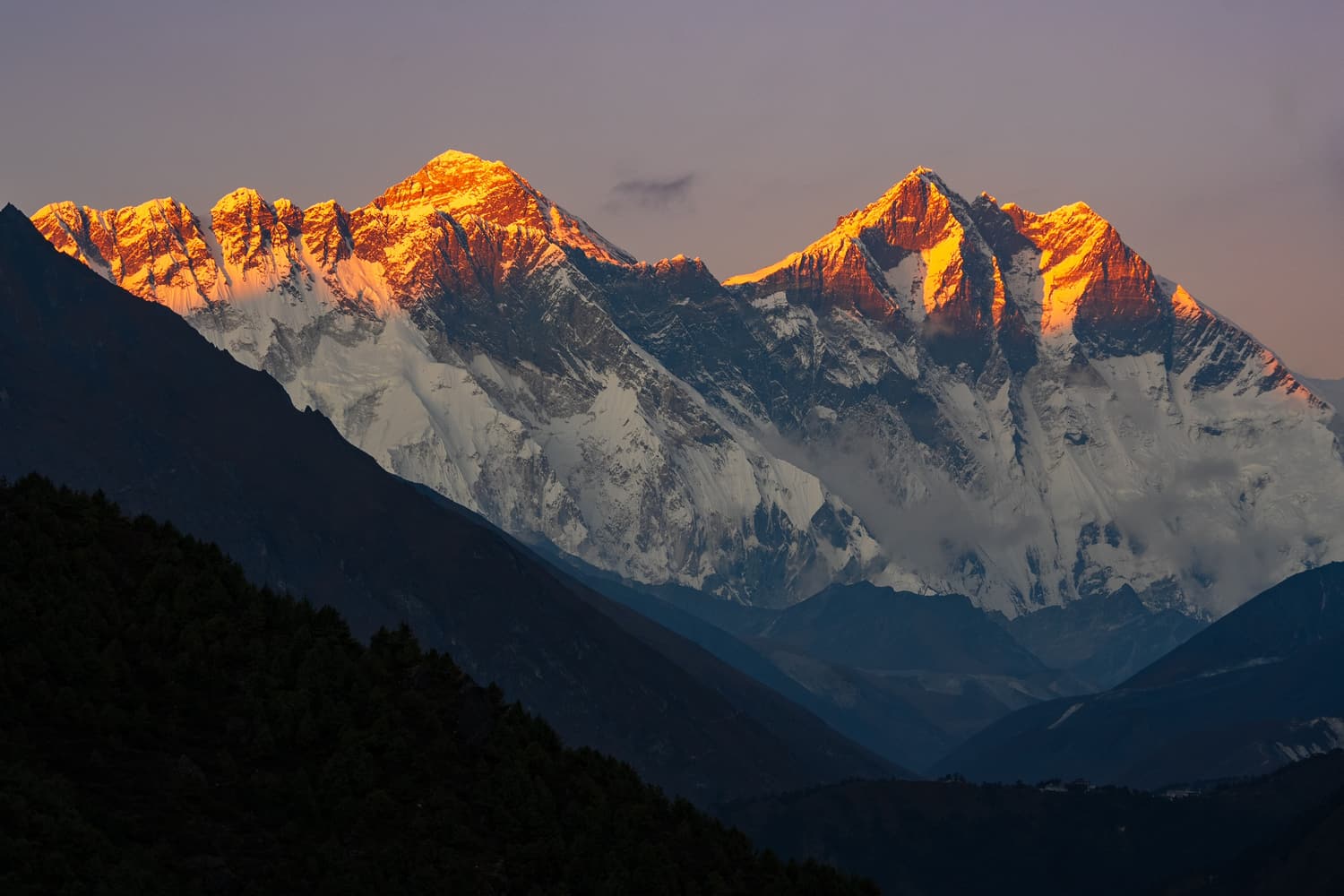
Twelve days on foot through Sherpa villages and monasteries, or one morning by helicopter — compare licensed-guide treks, flights and heli tours and book in a few taps.