This is the classic Everest Base Camp itinerary used by most reputable operators: 12 days from Lukla and back, with acclimatisation days in Namche Bazaar and Dingboche. Add two days in Kathmandu and at least one buffer day for Lukla weather and you have a realistic 14–16 day trip.
The itinerary at a glance
| Day | Route | Sleep at | Walking |
|---|---|---|---|
| 1 | Arrive in Kathmandu | Kathmandu (1,400 m) | — |
| 2 | Kathmandu: permits, gear, sightseeing | Kathmandu (1,400 m) | — |
| 3 | Fly to Lukla, trek to Phakding | Phakding (2,610 m) | 3–4 h |
| 4 | Phakding → Namche Bazaar | Namche (3,440 m) | 5–6 h |
| 5 | Acclimatisation: Everest View & Khumjung | Namche (3,440 m) | 3–5 h |
| 6 | Namche → Tengboche | Tengboche (3,867 m) | 5–6 h |
| 7 | Tengboche → Dingboche | Dingboche (4,410 m) | 5–6 h |
| 8 | Acclimatisation: Nangkartshang hike | Dingboche (4,410 m) | 3–4 h |
| 9 | Dingboche → Lobuche via Thukla | Lobuche (4,940 m) | 5–6 h |
| 10 | Lobuche → Gorak Shep → Everest Base Camp | Gorak Shep (5,164 m) | 7–8 h |
| 11 | Kala Patthar at dawn, descend | Pheriche (4,371 m) | 7–8 h |
| 12 | Pheriche → Namche Bazaar | Namche (3,440 m) | 6–7 h |
| 13 | Namche → Lukla | Lukla (2,860 m) | 6–7 h |
| 14 | Fly to Kathmandu (+ buffer day) | Kathmandu (1,400 m) | — |
Day by day
Day 1–2: Kathmandu
Arrive, meet your agency, check permits and kit, and rent anything missing in Thamel. Use the spare day for the Kathmandu Valley’s heritage sites — Boudhanath, Swayambhunath, Pashupatinath and the Durbar Squares — ideally on a guided day tour. If your flight leaves from Ramechhap, you will set off in the small hours.
Day 3: Lukla to Phakding
Land in Lukla, meet your porters and walk gently downhill along the Dudh Koshi to Phakding. The short day is deliberate: it lets you start acclimatising without pushing.
Day 4: Phakding to Namche Bazaar
Cross several suspension bridges, enter Sagarmatha National Park at Monjo and climb steeply from the high Hillary Bridge to Namche. On a clear day you get your first glimpse of Everest from a viewpoint on the ascent. It is the first hard day — go slowly.
Day 5: Acclimatisation in Namche
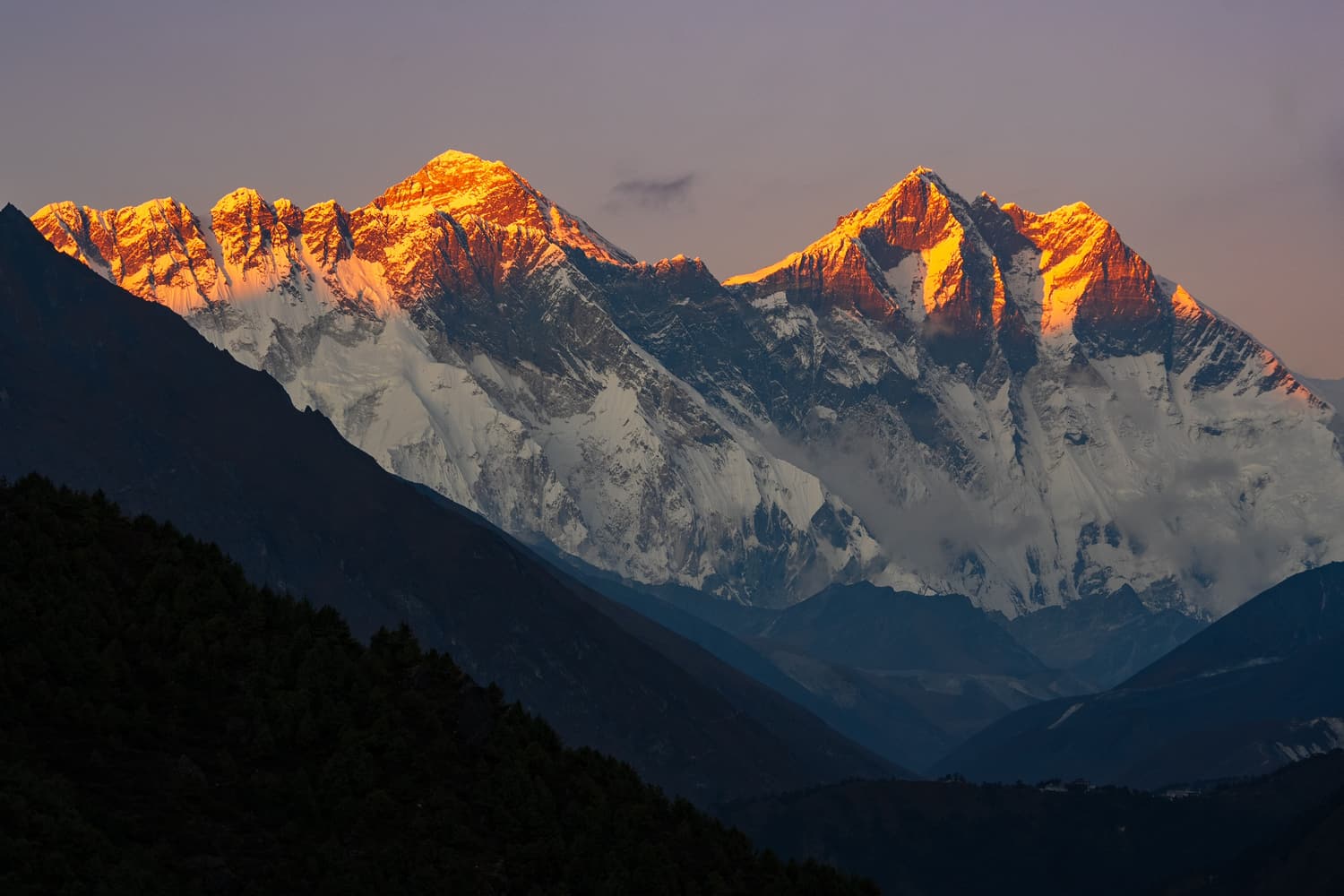
Hike up to the Syangboche ridge and the Hotel Everest View (about 3,880 m) for a classic panorama of Everest, Lhotse and Ama Dablam, then loop through the villages of Khumjung and Khunde before sleeping low again in Namche.
Day 6: Namche to Tengboche
A beautiful contouring path high above the river, a steep descent to Phunki Thenga and a long climb through rhododendron forest to Tengboche Monastery, with Ama Dablam filling the sky. Try to catch the afternoon prayers.
Day 7: Tengboche to Dingboche
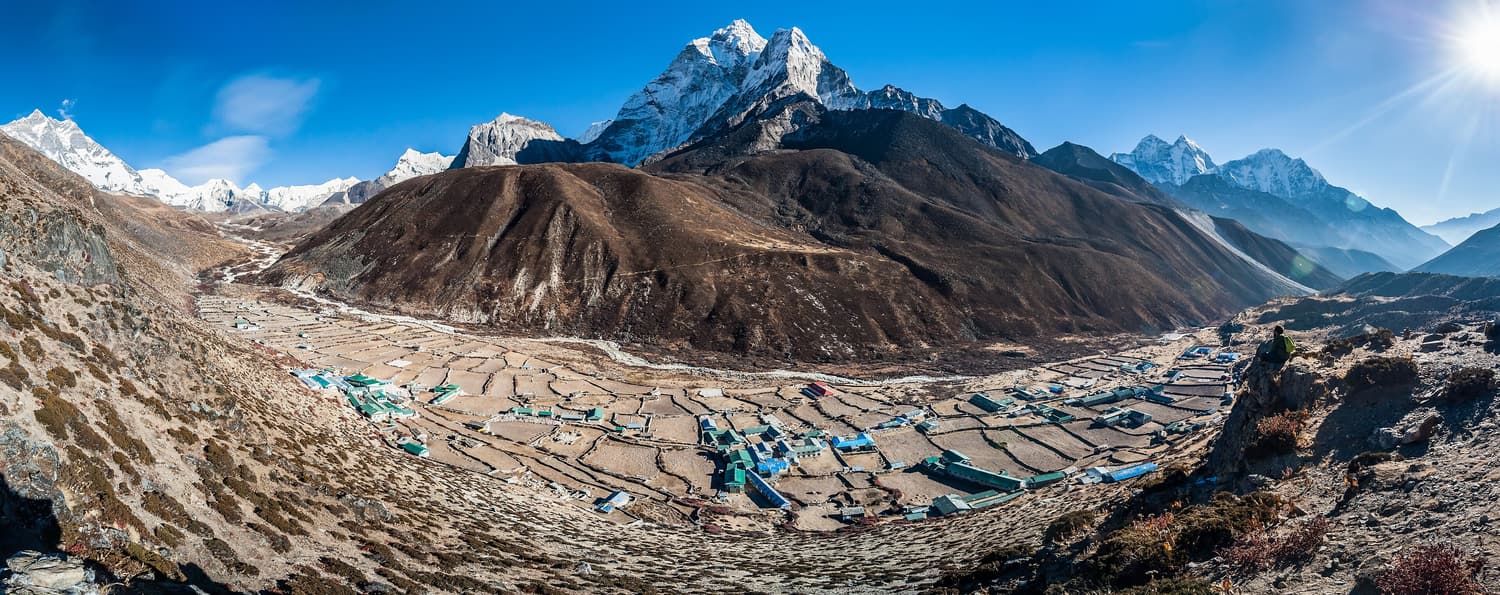
Through Deboche and past the old monastery at Pangboche into the Imja valley. Trees disappear, the landscape widens and you arrive at the stone-walled fields of Dingboche.
Day 8: Acclimatisation in Dingboche
Climb part or all of the ridge of Nangkartshang (the top is around 5,000 m) for views of Makalu, Lhotse and Island Peak, then return to Dingboche. This rest day is the most important of the trek.
Day 9: Dingboche to Lobuche
Traverse above Pheriche, climb the steep moraine to the Thukla Pass memorials to climbers who died on Everest, and continue beside the Khumbu Glacier to Lobuche. Nights now drop well below freezing.
Day 10: Lobuche to Gorak Shep and Everest Base Camp
A rough walk along the moraine to Gorak Shep, lunch and a room, then the out-and-back to Everest Base Camp on the Khumbu Glacier, beneath the Khumbu Icefall. Allow 2–3 hours each way from Gorak Shep.
Day 11: Kala Patthar and descent
Start before dawn to climb Kala Patthar (5,644 m), the best viewpoint for Everest itself, then descend all the way to Pheriche or Dingboche. Losing altitude feels wonderful.
Day 12–13: Back to Lukla
Two long days down via Namche. Celebrate in Lukla with your team — this is where tips are traditionally given.
Day 14: Fly to Kathmandu
Morning flight back to Kathmandu or Ramechhap. Keep at least one buffer day before your international flight.
Popular variants
- Gokyo Lakes (10–12 days): branch west from Namche to the turquoise lakes and climb Gokyo Ri for a view of four 8,000 m peaks. Quieter than the main trail. Gokyo guide.
- Gokyo + EBC via Cho La (15–17 days): combine both valleys by crossing the glaciated Cho La pass (5,420 m).
- Three High Passes (17–21 days): Kongma La, Cho La and Renjo La, with Base Camp and Gokyo on one circuit. For experienced trekkers. Three Passes guide.
- Everest View trek (5–8 days): Lukla, Namche, Hotel Everest View and Tengboche without going higher than about 3,900 m.
- Trek in, fly out: helicopter back from Gorak Shep after Base Camp.
Every variant is bookable with a licensed guide — compare options here.