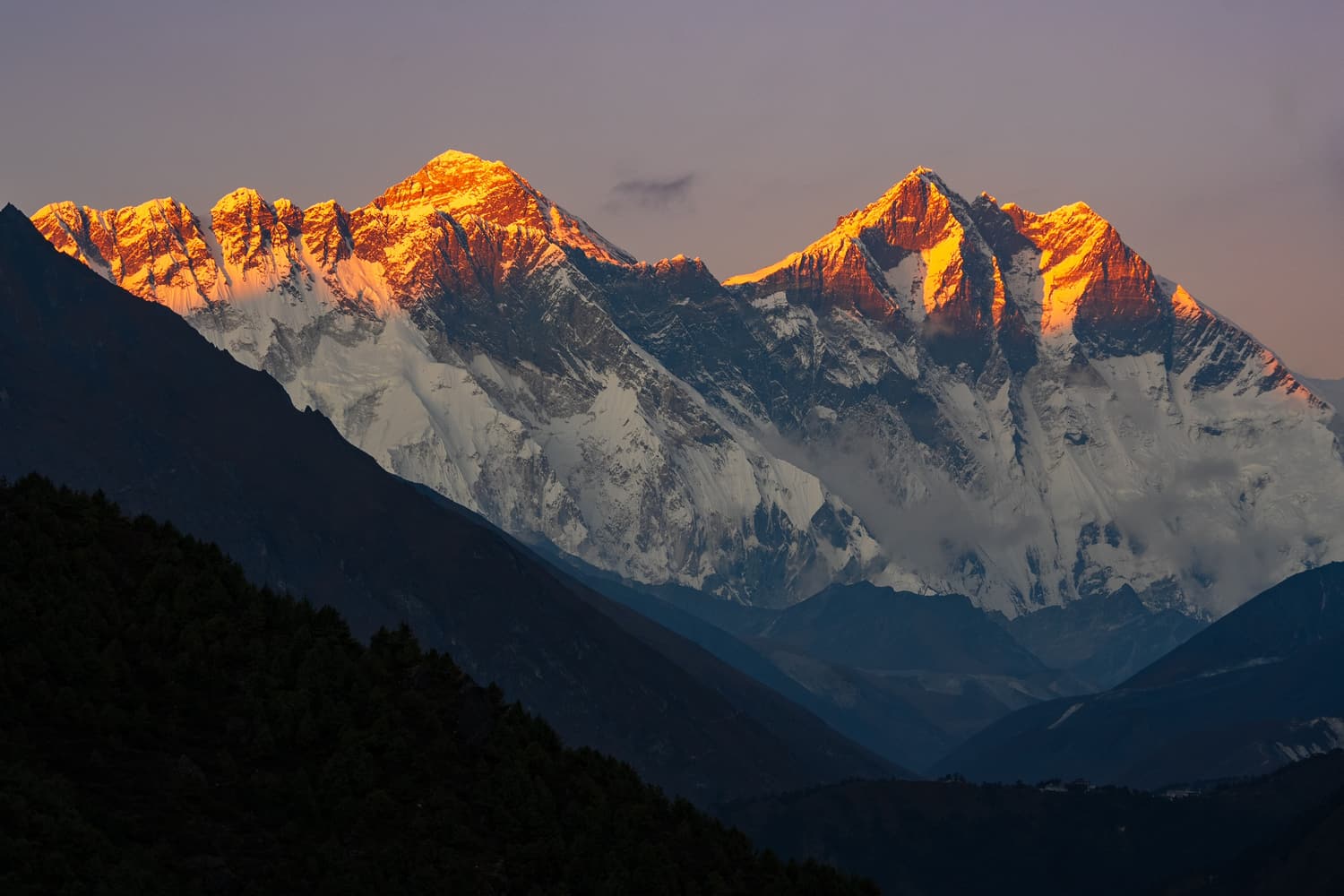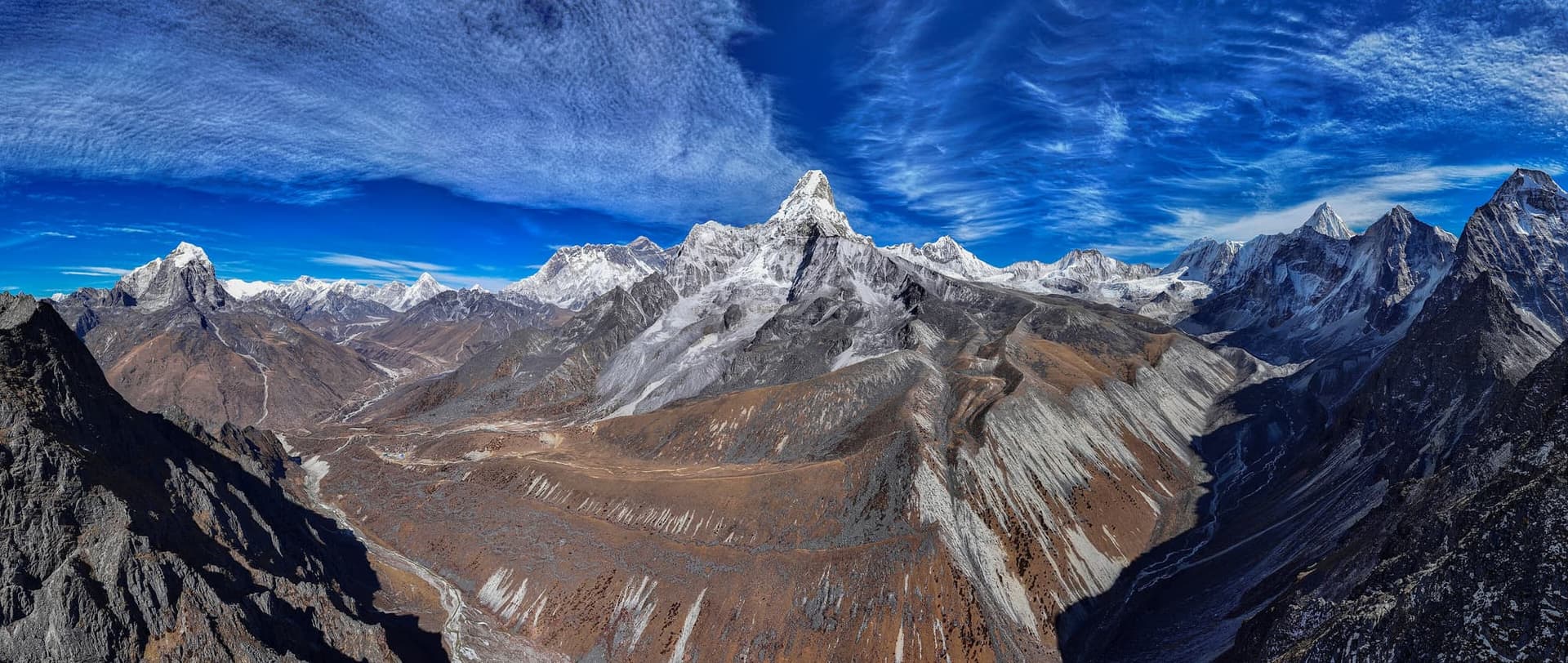
The Everest Base Camp trek is a round trip of roughly 130 km from Lukla through Sagarmatha National Park, a UNESCO World Heritage Site since 1979. It needs no climbing skills, but it does need planning: permits, a licensed guide, a sensible acclimatisation schedule, the right insurance and a realistic budget. This guide covers all of it.
At a glance
- Start/finish: Lukla (2,860 m), reached by flight from Kathmandu or Ramechhap.
- High points: Everest Base Camp (5,364 m) and Kala Patthar (5,644 m).
- Duration: 12 days Lukla to Lukla; 14–16 days from Kathmandu with buffer days.
- Accommodation: teahouses (mountain lodges) all the way — no camping needed.
- Best seasons: October–November and March–May.
Permits and fees
Two local charges apply on the classic route:
- Sagarmatha National Park entry permit — around NPR 3,000 per foreign visitor (plus VAT), paid at the park entrance at Monjo or in Kathmandu.
- Khumbu Pasang Lhamu Rural Municipality fee — around NPR 2,000 per person, collected in Lukla. It replaced the TIMS card in the Khumbu.
Fees are revised from time to time, so check current rates; most guided treks include both. Keep your receipts and passport handy — there are checkpoints along the way.
Do you need a licensed guide?
Since April 2023, Nepal has required foreign trekkers in its national parks and conservation areas to trek with a licensed guide arranged through a registered agency. The Khumbu was slower to apply the rule, but from 2025 you should plan on a licensed guide for Everest Base Camp — and many lodges, checkpoints and airlines now expect one. Rules and enforcement can change, so confirm the latest position with the Nepal Tourism Board before you travel.
In practice a good guide is worth far more than the rule: they manage acclimatisation, book lodges in busy seasons, handle flight chaos and recognise altitude sickness before you do. Porters (typically carrying up to about 20–25 kg, often shared between two trekkers) are optional but make a big difference. Compare guided treks.
Altitude sickness and acclimatisation
Acute Mountain Sickness (AMS) can affect anyone above about 2,500 m, regardless of fitness. Early signs are headache, nausea, loss of appetite, poor sleep and unusual tiredness. Its dangerous forms — HAPE (fluid on the lungs) and HACE (swelling of the brain) — can kill if you keep climbing.
- Go slowly. Above 3,000 m, raise your sleeping altitude by no more than about 300–500 m a day.
- Take the rest days. Namche Bazaar and Dingboche are the classic acclimatisation stops: "climb high, sleep low" on short day hikes.
- Drink, eat, sleep. Plenty of fluids, carbohydrates and no alcohol above Namche.
- Never ascend with symptoms. If they get worse, descend — even a few hundred metres helps.
- Talk to a doctor about acetazolamide (Diamox) before you go.
Where the trail goes
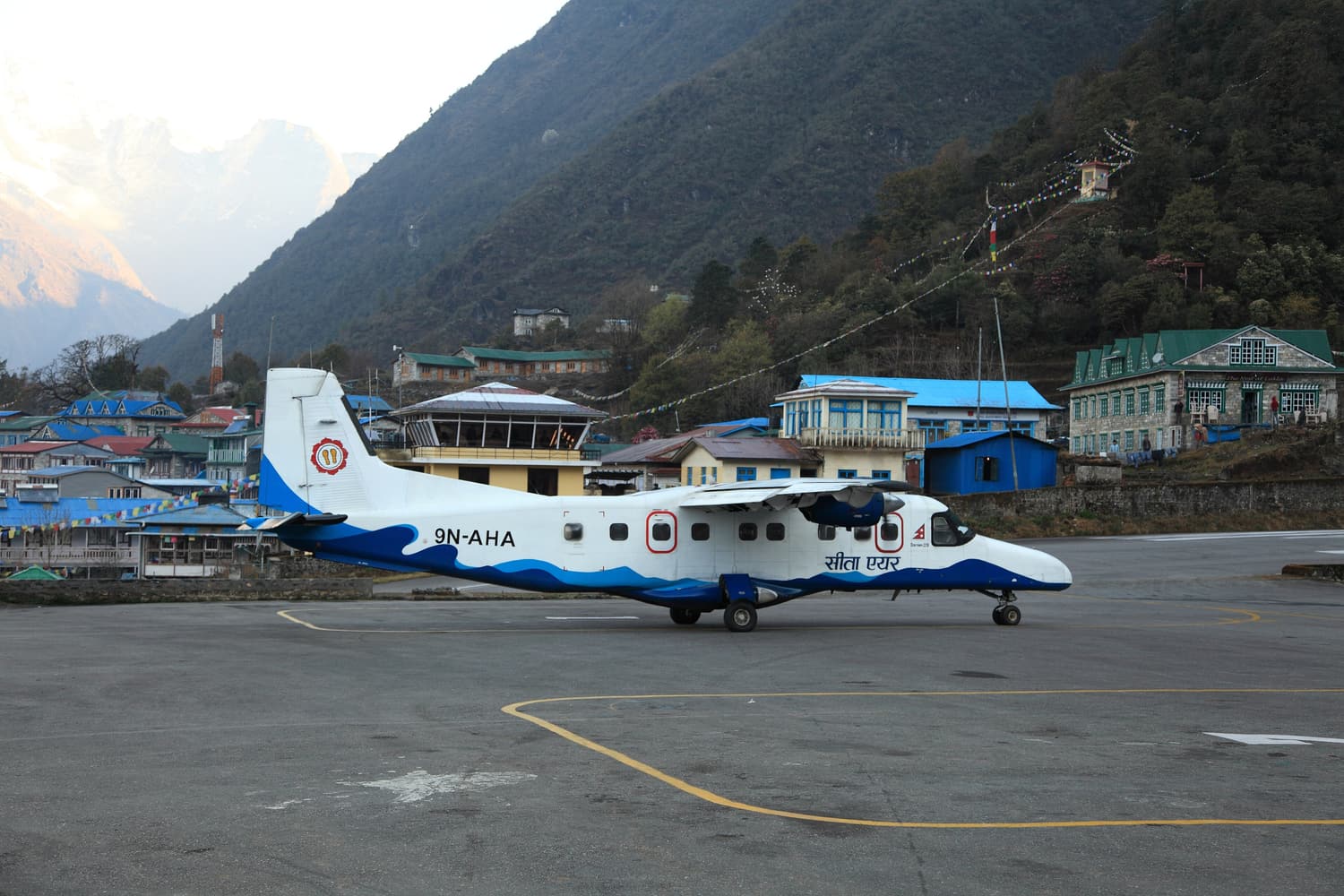 Lukla & the lower Khumbu 2,860 m
 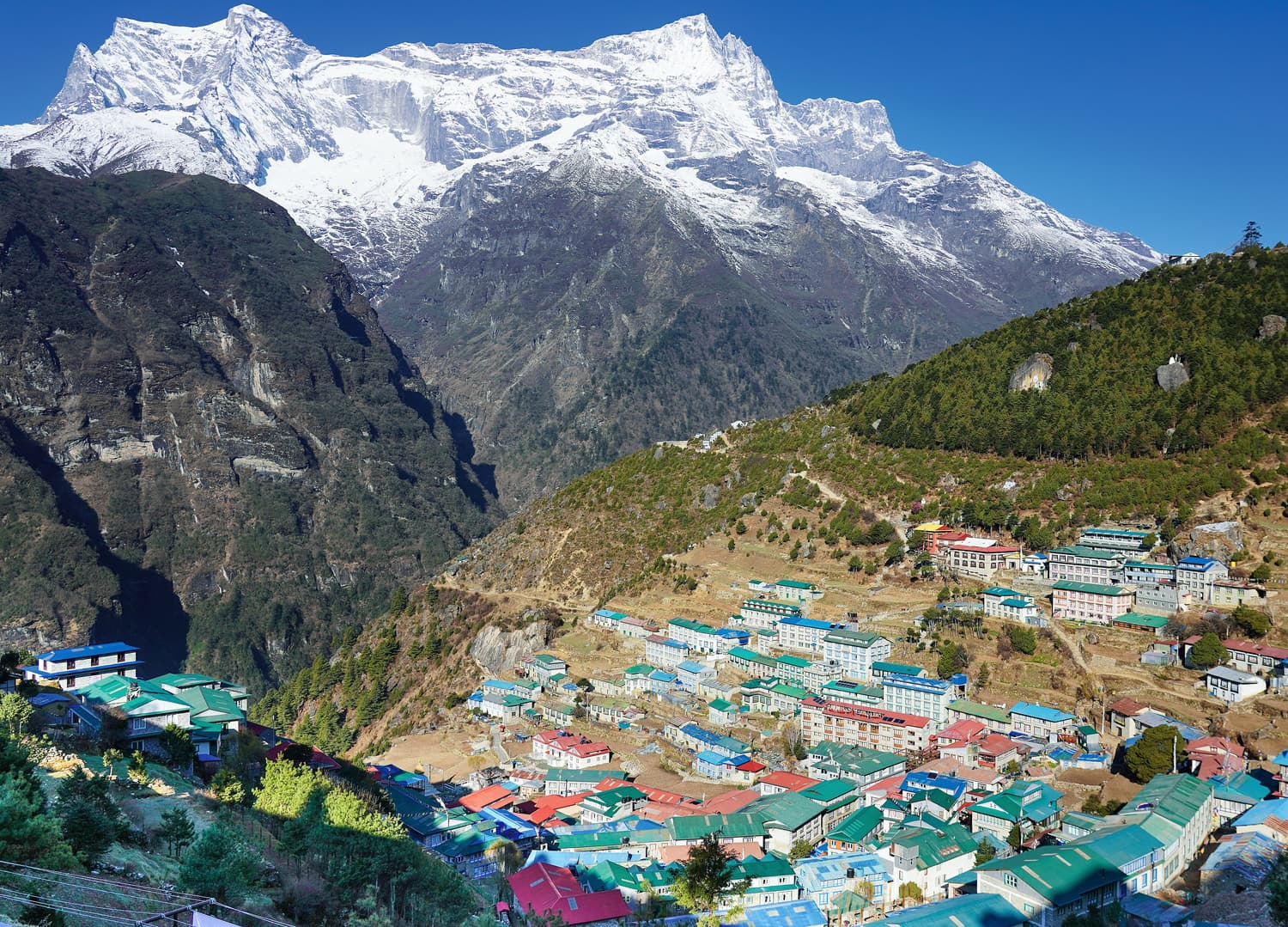 Lukla & the lower Khumbu 3,440 m
 Namche Bazaar
The Sherpa capital
A horseshoe of lodges, bakeries and gear shops in a natural amphitheatre at 3,440 m — the trading hub of the Khumbu and the place every trekker spends an acclimatisation day, with a first view of Everest just above town.
 The upper Khumbu 3,867 m
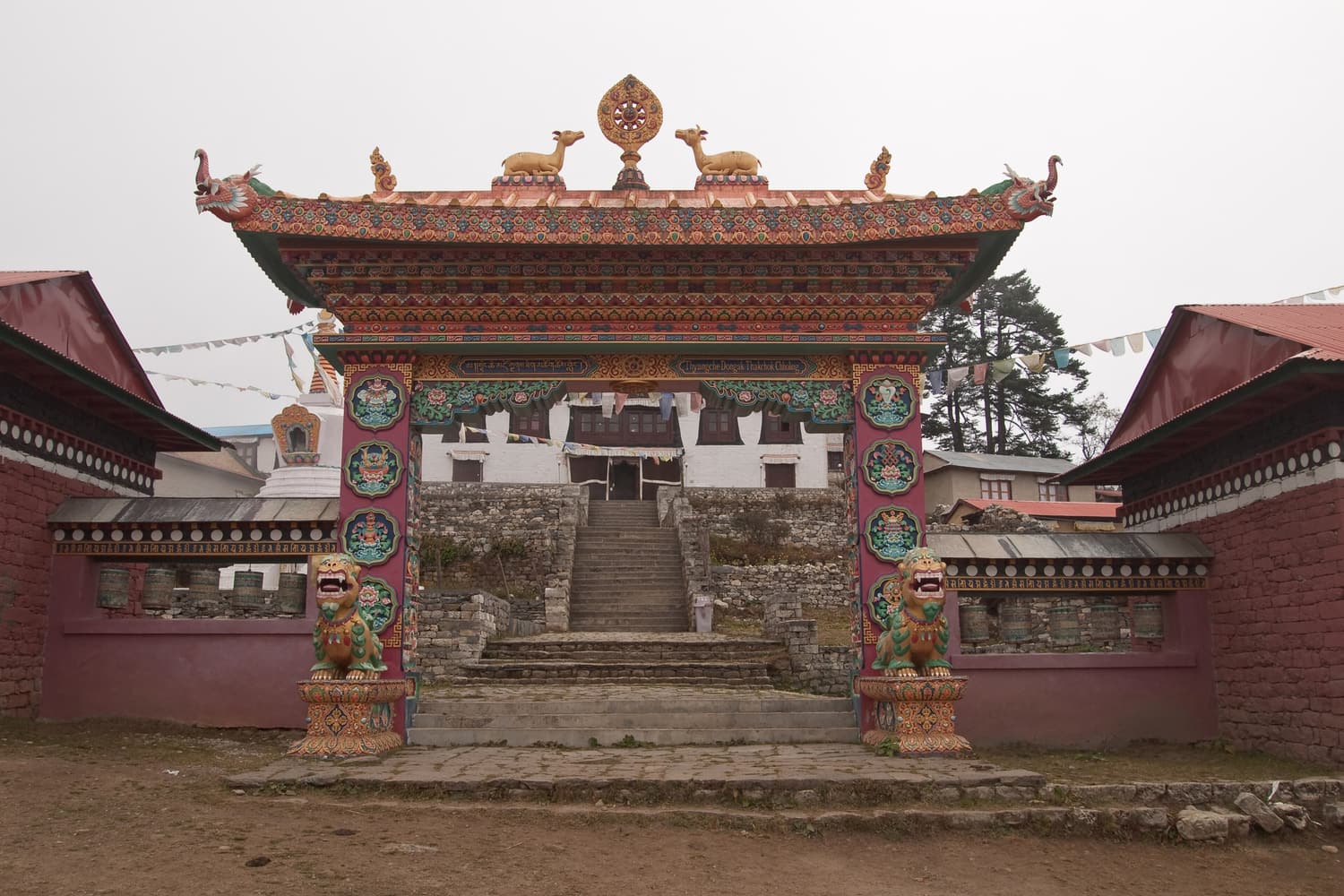
 Tengboche Monastery
The spiritual heart of the Khumbu
The largest monastery in the Khumbu, set on a forested saddle at 3,867 m with Ama Dablam and Everest on the horizon. Monks chant in the afternoon, and the Mani Rimdu festival fills the courtyard each autumn.
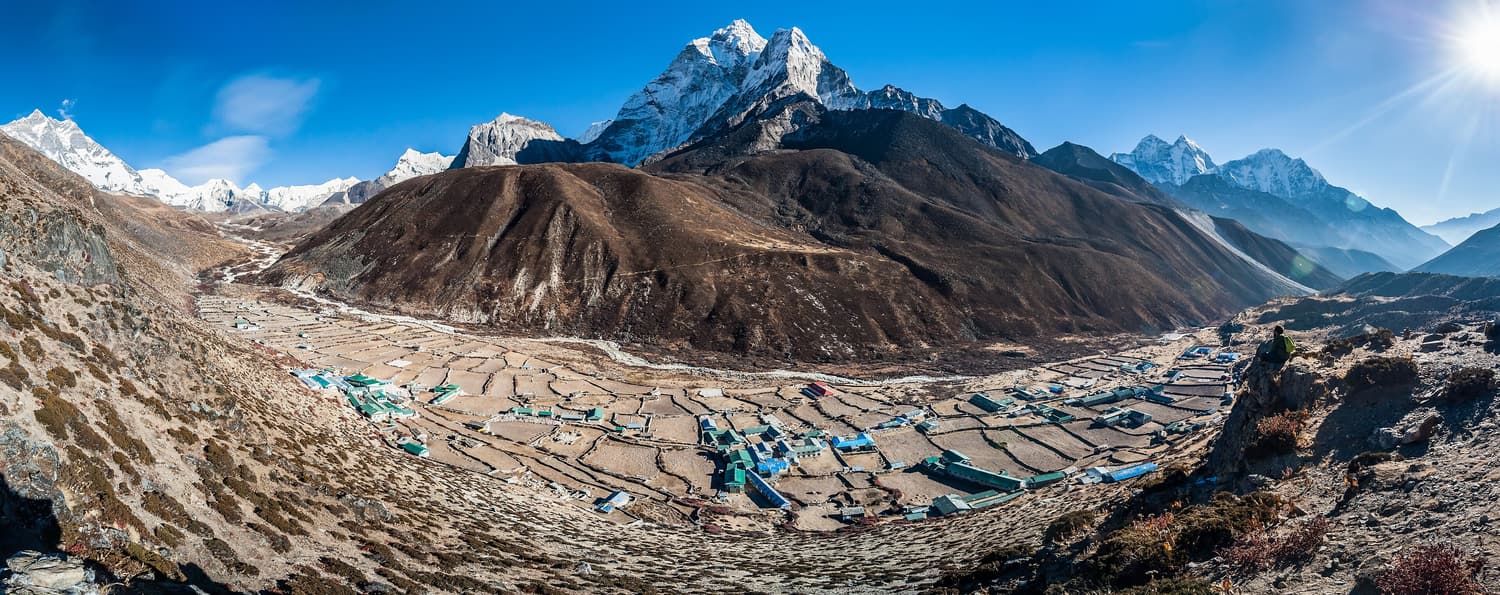 The upper Khumbu 4,410 m
 See every stop, with altitudes and tips, in our trail stops guide — and the full day-by-day itinerary.
What it costs
Costs rise with altitude, because everything above Lukla is carried by porters, yaks or helicopters. Indicative figures (check current prices):
| Item | Typical price |
|---|---|
| Lukla flight, one way | often US$200–250 |
| Sagarmatha National Park permit | ≈ NPR 3,000 + VAT |
| Khumbu municipality fee | ≈ NPR 2,000 |
| Licensed guide, per day | often US$30–40 |
| Porter, per day | often US$20–30 |
| Teahouse room | cheap or free if you eat there; more for en-suite |
| Meals, per day | rising from ≈ US$20 low down to US$35+ high up |
| Hot shower / battery charging / Wi-Fi | a few hundred rupees each |
| Guided package, Kathmandu to Kathmandu | ≈ €850–1,500+ on GetYourGuide |
Tip your guide and porter at the end of the trek; around 10–15% of the trek cost, shared between the team, is common.
Travel insurance
You need a policy that explicitly covers trekking up to at least 6,000 m and helicopter evacuation — a rescue from the upper Khumbu can cost thousands of dollars, and helicopter operators may ask for proof of cover before they fly. Check the altitude limit, the activity wording and whether you must call the insurer before an evacuation.
Teahouses, food and water
Lodges along the route offer twin rooms with thin walls, shared toilets (en-suites in Namche, Lukla and some higher villages), and a heated dining room where everyone gathers in the evening. Meals are hearty: dal bhat (rice, lentils and curry, with free refills), noodle soups, potatoes, Sherpa stew and fried rice. Many lodges expect you to eat where you sleep.
Avoid single-use plastic bottles: carry a filter or purification tablets and refill from lodge taps or the refill stations along the trail.
Packing list
- Sleeping bag rated to about −10 to −15 °C (or rent one in Kathmandu).
- Down jacket, fleece mid-layer, thermal base layers, waterproof shell.
- Broken-in trekking boots, camp shoes, good hiking socks.
- Warm hat, sun hat, gloves (liner + insulated), buff.
- UV-blocking sunglasses, high-factor sunscreen and lip balm.
- Trekking poles, headlamp, 30–40 litre daypack.
- Water bottles (1–2 litres) plus a filter or tablets.
- First-aid kit, blister care, any altitude medication your doctor prescribes.
- Power bank, cash in small notes, copies of passport and insurance.
Kathmandu’s Thamel district sells and rents everything; quality varies, so check zips and seams.
Money, phones and connectivity
- Cash is king: bring enough Nepali rupees from Kathmandu. Namche has ATMs, but they are not reliable and there are none higher up.
- Phone signal reaches many villages on the route but is patchy higher up.
- Wi-Fi is sold by the lodge or via prepaid regional network cards that work across much of the Khumbu.
Common mistakes
- Booking an international flight the day after your planned return from Lukla.
- Skipping the Namche or Dingboche rest day to "save time".
- Buying insurance that stops at 4,000 or 5,000 m.
- Carrying too much — the 15 kg Lukla allowance is real.
- Ignoring a headache. At altitude, it is information, not an inconvenience.
The Tibet side, briefly
Everest also has a north base camp in Tibet, reached by road from Lhasa rather than on foot. It requires valid China entry (a visa unless your nationality is visa-exempt), a Tibet Travel Permit and an organised tour — a completely different trip from the Khumbu trek.